

How to play tug with your dog safely
A good tug game is short, cooperative, and easy to pause. Choose a toy that suits your dog, invite them to take it, keep the movement controlled, and stop before the toy or either player becomes overwhelmed.
By Tail & Treat Editorial Team · Published Aug 26, 2026 · Updated Aug 26, 2026
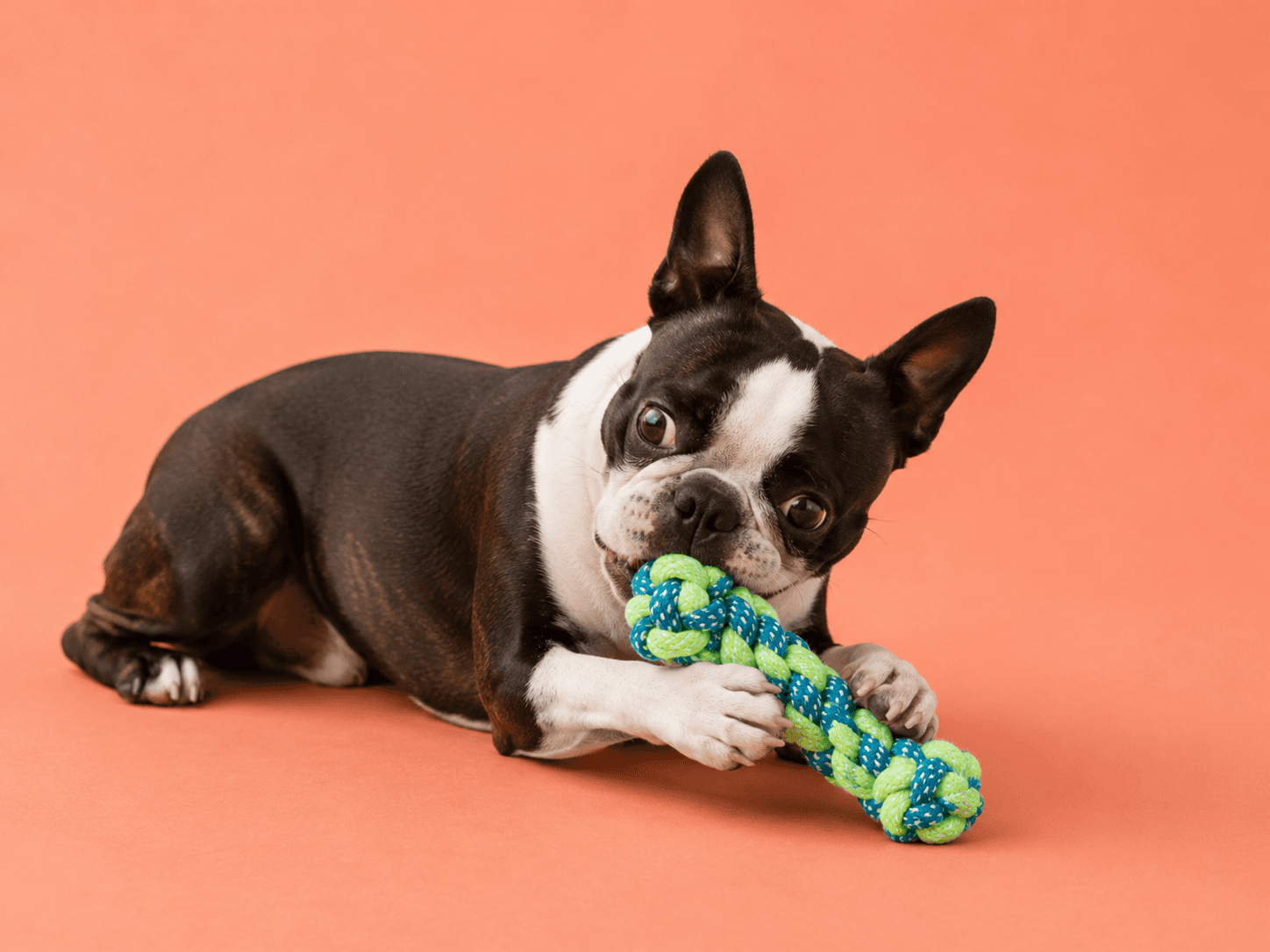
Is tug a reasonable game for dogs?
Tug can be a useful form of interactive play for dogs who enjoy gripping and pulling. It is not a test of dominance, and the goal is not to overpower your dog. The Blue Cross play guide describes tug as a rewarding game for many dogs and recommends teaching clear start-and-pause moments.
Not every dog enjoys tug. Choose another activity if your dog avoids the toy, becomes tense, guards it, or has a dental, neck, mobility, or other health concern that makes pulling uncomfortable. Ask your veterinarian when you are unsure whether the game suits your dog.
A simple five-step tug game
- Check the toy. Make sure it is large enough to hold without putting your hands beside your dog's mouth and remove it if it is frayed, split, or missing pieces.
- Invite the game. Present the toy and use a consistent cue such as “take it.” Let your dog choose whether to engage.
- Keep the first round gentle. Use controlled movement and avoid lifting your dog off the floor or making abrupt twists.
- Pause. Stop moving the toy, wait for the game to become boring, then use a familiar release cue or exchange for a small reward when needed.
- End clearly. Finish after a few short rounds, inspect the toy again, and put it away if it is intended only for supervised play.
Keep the session responsive to the dog in front of you. A dog who can pause, re-engage, and remain comfortable is giving you more useful information than a timer or a fixed number of rounds.
When should you stop?
Stop if teeth contact skin, the toy begins to break down, your dog swallows fibers or pieces, either player loses balance, or the dog becomes too tense to pause. Do not pull an item directly from a dog who guards toys; create distance and get qualified behavior guidance instead of turning the moment into a confrontation.
AAHA's enrichment guidance includes tug among interactive movement activities and emphasizes matching enrichment to the individual pet. Supervision and regular inspection matter because no tug toy is indestructible.
Choose a tug toy by material and play style
Bone Rope Tug Toy
A cotton-rope shape with room for gripping, carrying, and short supervised tug rounds. Remove it when the rope becomes heavily frayed.
Carrot Rope Tug Toy
A smaller cotton-rope option measuring 4.5 × 23.5 cm. Check that the size leaves enough space for your hand and fits your dog's play style.
EVA Foam Pull Ring
A lightweight EVA foam ring for supervised tug, fetch, and carrying. Remove it if biting creates loose pieces or significant damage.
Fit tug into the wider routine
Tug works best as one interactive option, not as a substitute for walks, rest, training, or social contact. Rotate it with other appropriate activities using the dog toy-rotation guide, or place a short play round into the Daily Dog Routine Planner.
Sources and further reading
Educational information only. Choose and supervise play based on your dog's size, health, mobility, behavior, and chewing style. Contact a veterinarian about pain, injury, or swallowed toy material.