
Why your dog ignores their toys, and how toy rotation can help
Dogs may lose interest in toys that are always available, do not match their preferences, or are meant for interactive play but are offered alone. Toy rotation means keeping a small, suitable active set out and switching items based on your dog's engagement, not on a rigid rule.
By Tail & Treat Editorial Team · Published Aug 2, 2026 · Updated Aug 2, 2026
Why dogs may ignore toys
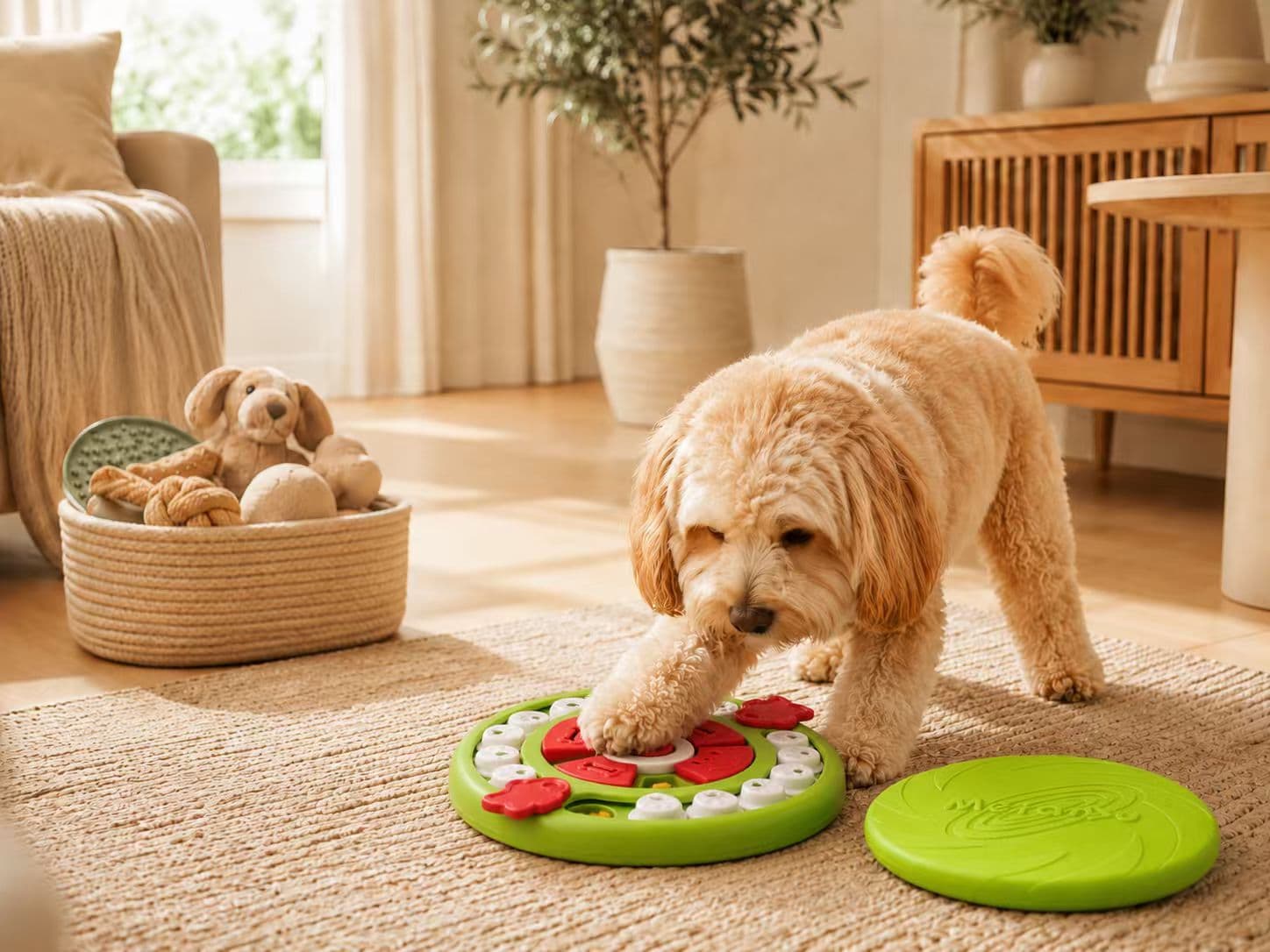
A toy that stays on the floor all day can become part of the background. But availability is only one reason for low interest. Some dogs prefer a particular texture, movement, scent, sound, food reward, or human participation. A toy designed for tug or fetch may not be very interesting when offered for solo play.
Low interest in one toy is not a diagnosis of boredom or a behavior problem. Look at the larger pattern: which toys does your dog approach, how long do they engage, and do they become more interested when you join in? That is more useful than buying several new items at once.
What dog toy rotation means
Toy rotation is a simple organization system. Put most suitable toys out of sight and leave a small group available. Reintroduce one or two stored items when the active set stops getting attention. The AAHA's enrichment guidance similarly suggests offering a variety of safe toy types and rotating small groups rather than leaving every toy out all the time.
Rotation is not a promise that any toy will become interesting. It gives you a calmer way to observe preferences, reduce clutter, and match an item to a specific routine moment.
A simple seven-day rotation example
Use this as a flexible pattern. Switch earlier, later, or not at all based on observed engagement and safety.
Active set: keep three to five appropriate items accessible
- One appropriate chewing item
- One food or puzzle activity
- One carrying or comfort toy, if your dog enjoys it
- One interactive play toy for use with you
- One familiar favorite, when it remains safe and appropriate
Stored set: place the rest out of sight
Days 1–3: keep the active set the same and notice which items your dog chooses. Days 4–7: replace one or two low-interest items with stored options, while keeping a safe familiar favorite if it still works for your dog.
Match toys to the activity
A rotation works best when it has context. Use an enrichment toy or food puzzle for a short supervised mental activity, a durable item that suits your dog for a rest period, and interactive toys for time you spend together. Treat a product description as a starting point, then use your own observation and safety judgment.
For a bigger picture of where meals, walks, play, and rest fit, see the daily routine guide for busy owners. The goal is not more stuff; it is a small number of moments you can repeat.
Which toys should not be left out unsupervised?
Any toy can become unsafe for a particular dog. Inspect items regularly, remove damaged toys, and match size and durability to the dog. The ASPCA's dog-chew guidance notes that larger, more durable products may be more appropriate for larger or intense chewers, while overall food and treat amounts still need to fit a nutritionally appropriate diet.
Do not leave rope, stuffing, small components, or easily fragmented items with an unsupervised dog. Test new toys while you are present. No toy is indestructible, and any dog that swallows pieces or destroys an item quickly needs a different setup.
What to note as you rotate
- Which toys your dog approaches without prompting
- How long engagement lasts, without turning it into a test
- Whether the item works best with human interaction
- Whether your dog damages, ingests, or guards any part of it
- Whether food motivation or behavior changes in a way that needs veterinary advice
If your concern is specifically what happens during an absence, do not use toy interest as the sole clue. Read the separation-related distress guide for how to use a camera and when to involve a veterinarian.
Frequently asked questions
How often should I rotate dog toys?
There is no universal schedule. Start by switching one or two items after a few days or when engagement drops, then adjust based on what your dog actually uses. Keep a familiar favorite available when appropriate.
Does a dog ignoring a toy mean they are bored?
Not necessarily. The toy may not fit that dog’s play style, it may require interaction, the setting may be distracting, or the dog may simply prefer another activity. Look at the wider pattern, not one unused toy.
Which toys can I leave with my dog alone?
That depends on your individual dog and the product. Test a new item while supervised, inspect it regularly, and remove anything damaged or easily swallowed. Do not leave ropes, stuffing, small components, or fragmenting items with an unsupervised dog.
Sources and further reading
Educational information only. Choose and supervise toys based on your own dog's size, chewing style, health, and behavior. Contact a veterinarian about injury risk, swallowed material, sudden behavior changes, or other health concerns.